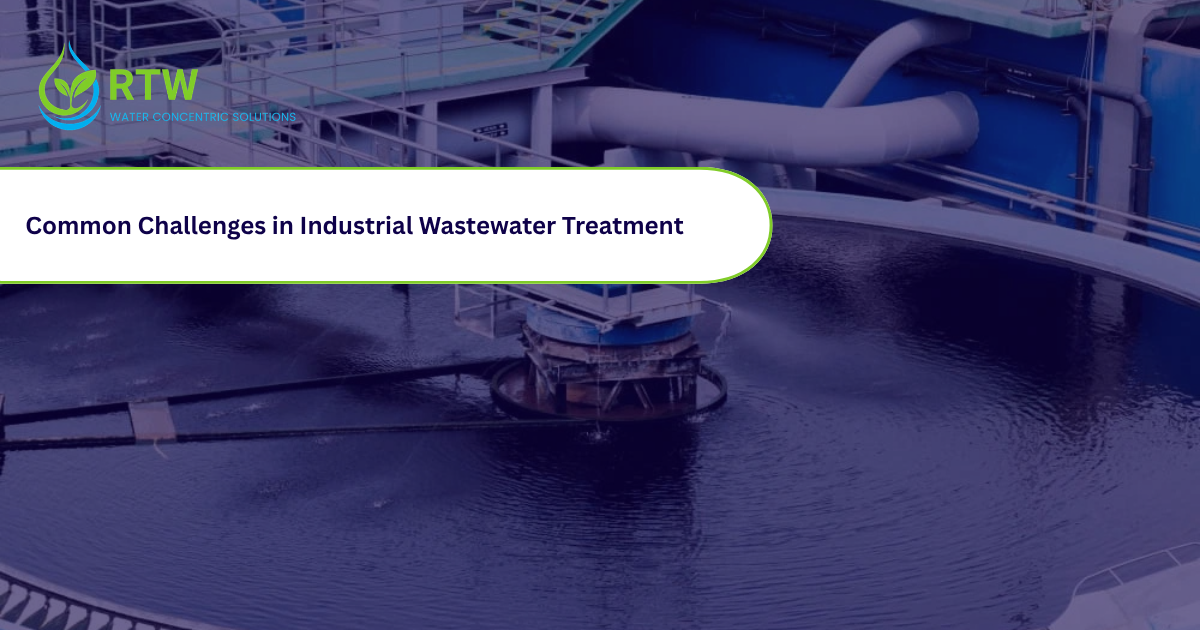
Industrial facilities produce wastewater every day through manufacturing, cleaning, cooling, and processing activities. This wastewater often contains oils, chemicals, heavy metals, suspended solids, and organic matter that require proper treatment before discharge or reuse.
As industries expand, treatment systems must handle greater volumes while meeting stricter environmental standards. These growing wastewater treatment challenges require reliable technologies, careful planning, and continuous monitoring.
Strong waste water management protects natural resources, supports regulatory compliance, and improves operational efficiency. Understanding the most common treatment obstacles helps industries make informed decisions and build systems that perform consistently for many years.
5 Common Challenges in Industrial Wastewater Treatment
Every industrial facility generates wastewater with different characteristics. Some industries discharge oily wastewater, while others produce chemical or high-strength organic streams. These differences create treatment difficulties that require practical engineering solutions. The following challenges appear across many industries and highlight why selecting the right treatment process remains essential.
1. Extreme Pollutant Diversity
Industrial wastewater rarely contains one type of contaminant. Food factories discharge organic waste, while chemical plants generate hazardous compounds. Textile facilities release dyes, and metal industries produce wastewater containing heavy metals.
This wide pollutant variation makes selecting one treatment method difficult. A single wastewater process often cannot remove every contaminant effectively. Facilities frequently combine physical, chemical, and biological treatment methods to achieve discharge standards.
The Solution:
Treatment begins with detailed wastewater analysis. Engineers evaluate pollutant concentrations before selecting suitable equipment. Modern wastewater treatment plant solutions often combine screening, coagulation, biological treatment, membrane filtration, and polishing technologies.
Using multiple treatment stages improves removal efficiency while creating flexible systems capable of handling changing wastewater conditions.
2. Fluctuating Flow Rates and Loads
Industrial production rarely remains constant throughout the day. Some factories operate continuously, while others experience heavy production during specific shifts. These changing operating conditions produce sudden increases in wastewater volume and pollutant concentration.
Large fluctuations place stress on treatment equipment and biological systems. Without proper balancing, treatment performance may decline, resulting in unstable discharge quality and higher operating costs.
The Solution:
Equalization tanks stabilize wastewater before treatment begins. These tanks balance flow rates and pollutant concentrations throughout the day. Automated monitoring systems also adjust chemical dosing and aeration according to changing conditions.
Proper balancing improves the efficiency of the treatment of wastewater while protecting downstream equipment from unnecessary overload.
3. Strict Regulatory Compliance
Environmental regulations continue becoming more demanding as governments strengthen water protection policies. Industries must control suspended solids, oils, nutrients, heavy metals, and organic pollutants before wastewater enters municipal networks or natural water bodies.
Failure to meet discharge standards may result in financial penalties, production delays, or reputational damage. Maintaining compliance requires continuous monitoring and regular system evaluation.
The Solution:
Modern plants for water treatment include automated sensors that continuously monitor water quality. Regular laboratory testing verifies treatment performance and identifies operational adjustments before compliance issues develop. Preventive planning also improves overall system reliability while reducing environmental risks.
4. High Operational and Investment Costs
Wastewater treatment requires electricity, treatment chemicals, skilled operators, laboratory testing, and equipment maintenance. Older treatment systems often consume excessive energy while producing inconsistent treatment results.
New facilities may also hesitate because initial installation costs appear significant. However, delaying upgrades often increases long-term expenses through higher maintenance requirements and lower treatment efficiency.
The Solution:
Energy-efficient equipment reduces operating expenses without sacrificing treatment quality. Water recycling programs also lower freshwater consumption and utility costs. Selecting scalable solutions for wastewater allows facilities to expand treatment capacity as production grows instead of replacing entire systems later.
Regular wastewater treatment plant maintenance also extends equipment life while preventing unexpected breakdowns that interrupt production.
5. Space Constraints and Aging Infrastructure
Many industrial facilities were built years before modern treatment requirements existed. Limited available land often makes plant expansion difficult. Older infrastructure may also struggle to support new treatment technologies.
Replacing entire treatment facilities can interrupt production and require significant capital investment. Industries therefore require solutions that improve performance within existing space limitations.
The Solution:
Compact treatment technologies help facilities maximize available space. Membrane systems, modular treatment units, and upgraded biological reactors provide higher treatment efficiency without requiring major civil construction.
Modern water treatment of plant upgrades allow industries to improve existing facilities instead of starting completely from scratch. Advanced waste water systems also simplify future expansion by allowing additional treatment modules to be installed when production increases.
Final Thoughts
Industrial wastewater treatment continues evolving as environmental standards become stricter and industries pursue greater efficiency.
Understanding common operational challenges allows businesses to select practical treatment strategies that improve reliability, reduce costs, and strengthen environmental performance. Long-term success depends on choosing technologies that support both compliance and sustainable industrial growth.
RT Water delivers customized industrial wastewater treatment solutions that improve compliance, optimize performance, and help industries build efficient systems for long-term operational success.
FAQs
What are the biggest challenges in industrial wastewater treatment?
Common challenges include changing pollutant levels, fluctuating wastewater volumes, strict environmental regulations, aging infrastructure, and rising operating costs that affect treatment performance.
Why is wastewater analysis important before treatment?
Wastewater composition varies between industries. Proper analysis helps engineers select suitable equipment and treatment methods that improve efficiency and maintain regulatory compliance.
How do equalization tanks improve wastewater treatment?
Equalization tanks balance wastewater flow and pollutant concentrations before treatment. Stable operating conditions improve biological performance and reduce stress on treatment equipment.
Why is wastewater treatment plant maintenance necessary?
Regular wastewater treatment plant maintenance reduces equipment failures, improves operational efficiency, extends system lifespan, and helps facilities maintain consistent treatment performance throughout the year.
What is the role of sewage treatment plants in industrial facilities?
Modern sewage treatment plants and industrial treatment facilities remove pollutants before treated water is discharged or reused, helping industries protect the environment and comply with regulations.