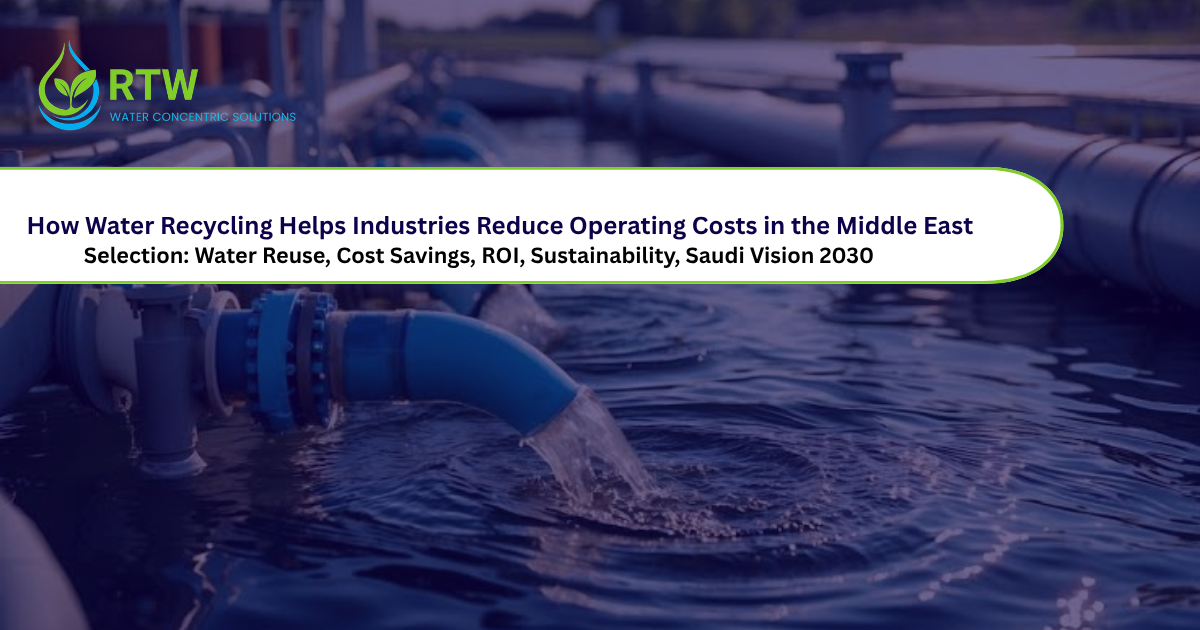
Water is a major expense for many industries across the Middle East. Factories use large amounts of water for production, cooling, cleaning, and other daily tasks. Much of that water eventually leaves the facility as wastewater. Buying fresh water while paying to manage wastewater can quickly raise costs.
Water recycling changes that cycle. With suitable industrial wastewater treatment systems, businesses can treat used water and return it to approved industrial uses. This reduces freshwater demand and lowers wastewater volumes. It also gives businesses greater control over water expenses while supporting wider conservation goals across the region.
Water Reuse Cuts Industrial Costs
Water recycling can affect several everyday expenses inside an industrial facility. The savings often start with freshwater purchases and wastewater disposal. They can also extend to water efficiency and operational reliability. The following areas show how properly treated wastewater can provide greater value while reducing the amount businesses spend on their water supply and waste management.
Lower Freshwater Purchasing Costs
Freshwater can become a major expense for factories that use thousands of cubic meters each day. Recycling reduces the amount of new water required for suitable tasks such as cooling, cleaning, and washing. Effective industrial wastewater treatment technologies can remove pollutants before treated water returns to an approved industrial process.
Reduce Wastewater Disposal Expenses
Wastewater creates costs after leaving a production process. Businesses may pay for collection, transportation, discharge, treatment, or disposal. Recycling reduces the volume requiring final disposal. Effective treatment of industrial effluents can also help facilities control what enters downstream waste systems and reduce recurring wastewater management expenses.
Improve Water Use Efficiency
Water recycling works best when a facility knows where water enters and leaves. Teams can identify processes that consume large amounts of water without requiring drinking-quality supplies. Suitable industrial wastewater treatment equipment can support filtration, membrane treatment, biological treatment, and other processes based on the water quality required for reuse.
Extend Water Resource Value
Water does not have to become waste after one production cycle. Proper treatment can keep usable water within the facility for longer. Suitable industrial wastewater treatment methods can recover water from different industrial streams while reducing pressure on freshwater supplies. This approach gives each unit of water greater working value.
Support Reliable Daily Operations
Water shortages can interrupt production and increase operating pressure. Recycling creates an additional source of usable process water inside the facility. Well-managed industrial wastewater treatment plants can provide steady treatment while monitoring changes in wastewater quality. This added water source can support smoother production and more predictable daily operations.
ROI and Sustainability Benefits
The financial value of recycling goes beyond the water bill. Businesses also have to consider disposal expenses, treatment costs, energy use, maintenance, and equipment life. At the same time, water reuse supports sustainability goals. Looking at these factors together gives industrial managers a clearer view of the investment and its long-term value.
Build a Stronger Water Recycling ROI
The return on a recycling project depends on water prices, wastewater volumes, treatment requirements, energy use, maintenance, and recovered water. A facility using large volumes may have greater savings opportunities. Effective industrial wastewater treatment systems can improve the value of recovered water by producing quality suitable for planned industrial applications.
Reduce Long-Term Operating Expenses
Recycling can reduce recurring expenses rather than creating a one-time saving. Lower freshwater demand and reduced wastewater discharge can affect monthly operating budgets. Energy and maintenance still require attention. A suitable industrial wastewater solution should balance treatment performance with practical running costs so the system remains financially useful over time.
Support Sustainable Industrial Growth
Water recycling reduces freshwater demand and keeps more treated water within productive use. This supports responsible resource management while helping businesses control costs. Saudi Arabia has also identified treated wastewater reuse as an important part of improving water management. These efforts give industries a strong reason to improve their own recycling practices.
Align With Saudi Vision 2030
Saudi Vision 2030 gives strong attention to sustainable water management. National programs support better water efficiency and greater use of treated wastewater. Industries using suitable industrial effluent treatment techniques can support these broader goals while reducing their own freshwater consumption. This creates a practical connection between industrial efficiency and national sustainability targets.
Practical Water Recycling Steps for Industry
A successful recycling project begins with a clear understanding of the facility. Businesses should measure water use, identify wastewater sources, and understand the quality of each stream. The treatment process should then match the intended reuse application. These practical steps can help companies control costs while building a reliable recycling program.
- Identify processes that consume the most water each day.
- Measure wastewater volume and quality at major discharge points.
- Separate wastewater streams when they require different treatment processes.
- Select treatment based on the intended water reuse.
- Match recycled water with applications that meet quality requirements.
- Track water savings, energy use, treatment costs, and maintenance expenses.
- Maintain industrial wastewater treatment equipment regularly to support consistent performance.
Regular testing also matters after a recycling system becomes operational. Wastewater quality can change when production materials, chemicals, or cleaning processes change. Monitoring these changes helps operators keep treated water within the required quality range.
Recycling should therefore become part of normal facility management. A system that receives regular testing and maintenance is easier to manage over time. It can also provide clearer information about water savings, treatment performance, and operating costs.
Turn Water Savings Into Operating Savings
Water recycling gives industries a practical way to reduce recurring costs while using resources more responsibly. The right industrial wastewater treatment approach can turn used water into a useful resource for approved applications.
RT Water provides treatment solutions that help industries improve water reuse and manage wastewater costs. Partner with RT Water to build a practical treatment strategy for your facility.
FAQs About Industrial Water Recycling
How does water recycling reduce industrial operating costs?
Water recycling reduces freshwater purchases and wastewater disposal volumes. These recurring savings can gradually lower the facility’s overall water-related operating expenses.
Which industries benefit most from water recycling?
Industries with high water demand can gain substantial value from recycling. Manufacturing, textiles, food processing, chemicals, and power operations are common examples.
Can recycled wastewater be used in industrial processes?
Yes, treated wastewater can support approved industrial uses when its quality meets process requirements. Treatment requirements depend on the intended application.
How does water recycling support Saudi Vision 2030?
Water recycling supports Saudi Vision 2030 by improving efficiency, increasing treated wastewater reuse, and reducing pressure on limited natural water resources.
What affects the ROI of a recycling system?
Water prices, wastewater volumes, treatment requirements, energy use, maintenance, equipment costs, and recovered water volumes all affect the final return.