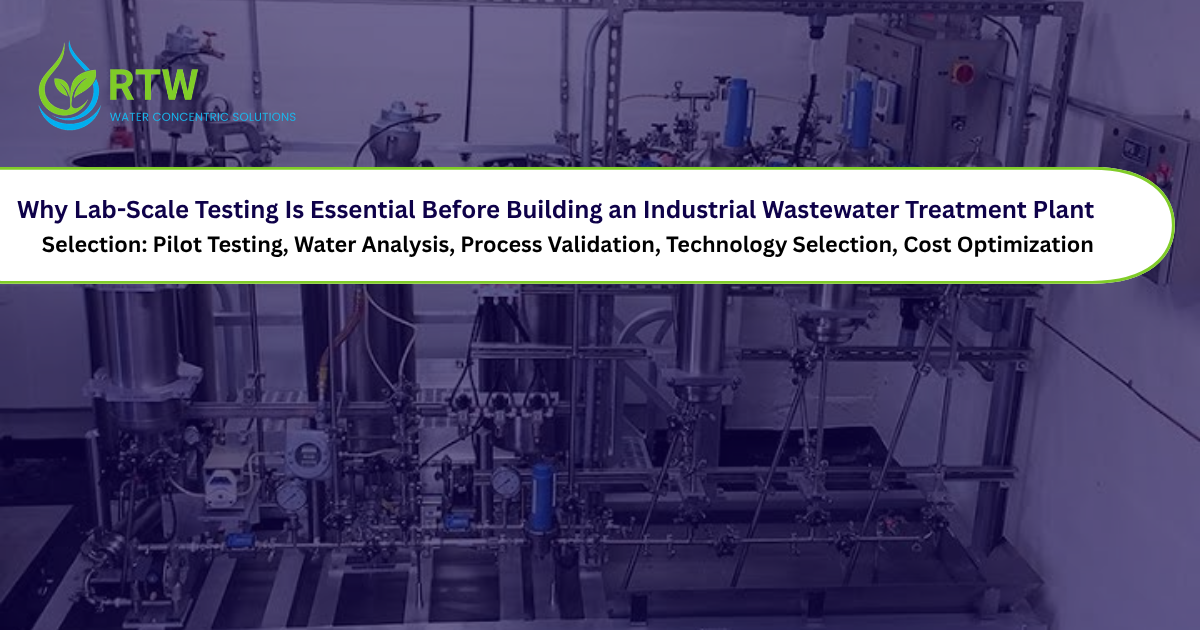
Building an industrial wastewater treatment plant requires careful planning before construction begins. Every industry produces wastewater with different pollutants and treatment needs. A process that works well for one facility may produce poor results at another site.
Lab-scale testing gives engineers useful information before large equipment is purchased or installed. It shows how wastewater reacts to different treatment methods and helps identify suitable operating conditions.
A wastewater testing lab can examine key parameters and test several treatment options. These results support better technology selection and help control future costs. Early testing also reduces design errors and prevents expensive changes after construction.
Why Lab-Scale Testing Matters
Lab testing gives treatment designers facts they can use before committing to full-scale equipment. Small trials show how contaminants respond to different processes. The results also reveal treatment limits and operating needs. Five areas deserve close attention before final plant design begins.
Pilot Testing
Pilot testing places a treatment process on a smaller scale before full construction. Engineers can feed actual wastewater through the system and observe its performance.
These trials can show how well different processes remove pollutants. They can also reveal problems with chemical dosing, biological activity, membrane fouling, sludge formation, or treatment capacity.
Pilot work becomes especially useful when wastewater changes throughout production. A facility may produce different wastewater streams during cleaning, processing, or equipment operation. Testing several samples gives engineers a clearer operating picture.
Water Analysis
Accurate water analysis forms the foundation of a suitable treatment design. Engineers must understand what enters the plant before deciding what treatment stages should follow.
Common tests can examine pH, COD, BOD, suspended solids, oils, metals, nutrients, salinity, and other pollutants. The exact testing plan depends on the industry and its production process.
A wastewater testing lab can also examine how wastewater changes over time. This information helps engineers account for peak loads instead of designing around one isolated sample.
Process Validation
A treatment process may look suitable on paper but behave differently with actual industrial wastewater. Lab trials provide an opportunity to test that process under controlled conditions.
Engineers can adjust chemical doses, contact times, biological loading, filtration rates, or other operating factors. They then measure the treatment results.
This process validation gives the design team stronger evidence before equipment specifications are finalized. It also helps identify treatment steps that may require additional control.
Technology Selection
Industrial wastewater may require several treatment stages. Common options include coagulation, DAF, biological treatment, membranes, oxidation, and other processes.
Lab testing lets engineers assess these options using the actual wastewater. The team can test individual processes and combinations to determine which treatment train provides the required results.
Technology selection should also account for future operating costs. A treatment method that achieves good removal may still create high chemical, energy, sludge, or maintenance expenses.
Cost Optimization
Testing can reduce unnecessary spending before construction starts. Early results can help engineers avoid selecting equipment that is too large or unsuitable for the wastewater.
Testing also supports better estimates for chemicals, energy, sludge handling, membrane replacement, and other operating expenses.
Small testing costs can prevent much larger expenses later. Finding an unsuitable process after construction could require equipment changes, additional treatment stages, or major plant modifications.
What Lab-Scale Testing Reveals Before Construction
Lab-scale work provides practical information that supports both engineering and financial decisions. The results can answer important questions before the project reaches construction.
- Wastewater characteristics: Testing identifies major pollutants and their concentration ranges.
- Treatment performance: Trials show how effectively each process removes targeted contaminants.
- Operating conditions: Testing helps establish suitable chemical doses and process conditions.
- Technology suitability: Different technologies can be tested using representative wastewater samples.
- Cost factors: Results support better estimates for chemicals, energy, sludge, and maintenance.
From Laboratory Results to a Full-Scale Treatment Plant
The value of testing continues after the laboratory work finishes. Results become part of the engineering information used for plant sizing, equipment selection, process control, and operating plans.
Turning Test Results Into Design Parameters
Laboratory results can support calculations for treatment capacity and equipment sizing. Engineers can use the findings to establish chemical doses, biological loading, membrane requirements, and other design values.
These figures provide a stronger starting point for detailed engineering. They also help reduce uncertainty during equipment selection.
Supporting Technology Selection
Testing can confirm which technologies suit the wastewater and required treatment targets. It may also show that several processes should work together as one treatment train.
The final selection should account for treatment performance, space, energy use, chemical demand, maintenance, and expected operating conditions.
Improving CAPEX and OPEX Planning
Capital expenditure covers equipment, construction, installation, and related project costs. Operating expenditure includes chemicals, power, labor, sludge handling, cleaning, and maintenance.
Lab testing gives project teams better information for estimating these expenses. More reliable estimates can support stronger financial planning before construction begins.
Building a Reliable Treatment Strategy
A good treatment strategy starts with the wastewater itself. Testing shows what contaminants require removal and which processes can address them.
The final plant can then include suitable pretreatment, biological treatment, membrane stages, or advanced processes based on measured results.
Maintaining Better Laboratory Records
Testing does not end after the initial plant design. Regular sampling helps confirm that wastewater remains within expected ranges.
A wastewater LIMS can support ongoing sample tracking and reporting. Consistent records also make future process reviews easier for plant operators and engineers.
Takeaway
Lab-scale testing gives industrial projects valuable evidence before major construction begins. It supports accurate water analysis, process validation, technology selection, and cost planning. Testing can prevent unsuitable designs and reduce expensive changes later. RT Water can support your wastewater treatment project with practical testing and engineering expertise. Reach out to RT Water today to plan the right treatment approach.