Industrial Waste Water Treatment in Abu Dhabi
- Industrial Waste Water Treatment in Abu Dhabi
Industrial Waste Water Treatment in Abu Dhabi
RTW provides technically reliable, regulation-compliant, and operationally secure solutions for wastewater treatment in the Middle East. We specialize in building and managing systems that treat complex industrial effluents across all sectors.
Our focus is on minimizing environmental impact while ensuring that each industrial wastewater treatment plant in Abu Dhabi operates efficiently, safely, and in full accordance with local and international standards.
Industrial Waste Water Treatment Processes
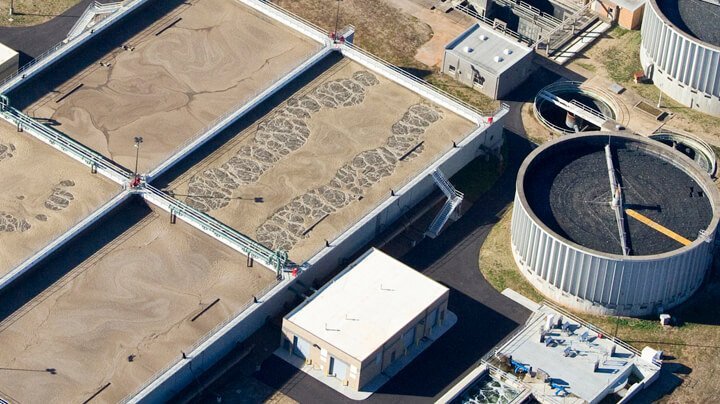
Water discharged from industrial processes contains a mix of organic, inorganic, and chemical pollutants. To reduce harm to ecosystems and meet compliance requirements, it must undergo structured treatment. Our methodology uses time-tested engineering combined with modern advancements.
Biological Processes
In the biological stage, living microorganisms are introduced to break down contaminants. These microorganisms feed on dissolved organic matter, such as oils, nitrogen compounds, and phosphates—transforming them into non-harmful substances like gases and stable solids. The process is essential to decrease the pollutant concentration before physical or chemical methods are applied.
Physical Processes
The physical stage is centered on separation without altering the chemical makeup of the water. Pollutants are removed through sieving, flotation, sedimentation, and filtration. This step is often the first line of treatment to remove larger solids and suspended materials that interfere with subsequent stages.
Chemical Processes
Certain pollutants resist biological and physical methods. For these, specific chemical agents are introduced. We use flocculation to bind fine particles, coagulation to clump together suspended matter, oxidation to break down toxic elements, and pH neutralization to balance water acidity. These chemical adjustments help meet final discharge parameters.
Sustainability and Wastewater Treatment Services in Abu Dhabi By RTW
RTW integrates environmental responsibility into all operations. Each decision, design, and deployment is built around sustainability benchmarks that align with both industrial goals and national environmental directives.
Reduced freshwater dependency through optimized recycling loops
Energy-efficient systems that minimize overall electricity use
Sludge volume reduction strategies to limit disposal needs
Smart flow control to prevent process overruns and waste
Real-time data monitoring to improve responsiveness and maintenance
Materials selection based on durability and lower environmental impact
Each solution is designed to last, serve, and remain safe under continuous use.
Structured Workflow Breakdown of Primary Treatment Technology in WWTP
Effective wastewater treatment begins with a disciplined, step-by-step approach. Each component of the primary phase is designed to reduce pollutant levels and protect all downstream processes. RTW implements a structured workflow using proven technologies that separate solids, extract grit, and neutralize contaminants before the wastewater reaches biological or chemical treatment systems.
Initial Solid Separation
Before any high-efficiency processing begins, the first task is to physically remove disruptive solid matter. This starts with barrier systems that screen incoming industrial effluent. Materials such as plastic fragments, metal shards, rags, and packaging waste are intercepted through a tiered screen setup—coarse, fine, and micro. Automated cleaning ensures the system remains operational around the clock.
Heavier Particulates Settled Through Grit Channels
Once large debris is removed, the focus shifts to heavier but smaller inorganic materials like gravel, sand, and ceramics. These materials can seriously damage downstream systems if left untreated. To prevent this, the flow is reduced inside specially engineered grit chambers. RTW installs horizontal-flow, aerated, or vortex systems depending on the plant layout and industry type.
Holding Tanks for Phase Separation
At this stage, water is routed into large clarifiers—engineered tanks where sedimentation occurs. Heavier organic and inorganic matter settles into sludge at the tank’s base. Simultaneously, greases and lighter oils float and are skimmed from the surface. Both layers are continuously removed using automated mechanisms, keeping the process efficient and hands-free.
When Chemistry Comes In
Some types of wastewater require chemical assistance for optimal treatment. In these cases, RTW applies specific additives to encourage finer particles to bind and settle. Coagulation and flocculation agents are used selectively based on influent data, ensuring each project remains cost-effective and compliant.
Why RTW Choose for Wastewater Treatment in Abu Dhabi
RTW is known among wastewater treatment solution-providing companies in Abu Dhabi for maintaining the balance between technical excellence and regulatory precision. We don’t simply build treatment plants—we manage long-term water quality risks for our clients, helping them stay compliant, operationally efficient, and environmentally safe.
Our engineers and technicians bring hands-on expertise in a wide range of wastewater treatment working models, from batch-type systems to continuous-flow plants. Every site is analyzed for its industrial output, chemical complexity, water consumption, and discharge characteristics. Treatment strategies are then implemented based on evidence.
As one of the proven wastewater treatment companies in Abu Dhabi, we don’t provide one-size-fits-all systems. Each wastewater treatment objective is approached with precision, making sure that the result is reliable, measurable, and sustainable. Whether it’s the installation of a new plant or the upgrade of an old one, RTW ensures that water quality standards are achieved consistently.
We recognize the need for transparency, especially in matters affecting public health and environmental integrity. That’s why our systems are not only monitored regularly but are also designed for easy inspection and audit. As one of the few wastewater treatment companies with such provisions, we are trusted for both our solutions and our accountability.
RTW’s ongoing mission is to support responsible industrial growth. With a focus on reliability, safety, and long-term efficiency, we remain a dependable partner for wastewater treatment services in Abu Dhabi.
Advanced Treatment Technologies We Use
Some industrial discharges involve a high load of chemicals, heavy metals, or organic contaminants that cannot be effectively treated using standard methods. In such cases, RTW applies advanced technologies to ensure compliance and protect surrounding ecosystems.
Biological Treatment
This treatment method breaks down biodegradable pollutants using controlled microbial activity. It is highly effective in reducing Biological Oxygen Demand (BOD) and Chemical Oxygen Demand (COD), both of which are key indicators of water pollution levels.
Electrocoagulation (EC)
In this process, electrical current is applied to wastewater to destabilize and bind pollutants, especially heavy metals and emulsified oils. It is especially effective during the early stages of treatment and helps reduce the need for chemical additives.
Electro-Oxidation (EO)
This method generates strong oxidants within the water stream, which attack and decompose persistent organic pollutants. EO is well-suited for dealing with effluents from pharmaceutical, textile, and petrochemical industries where standard oxidation methods fall short.
Membrane Bioreactors (MBR)
MBR systems integrate biological treatment with membrane filtration. The result is high-quality effluent with low pathogen counts, reduced treatment steps, and compact plant design. These systems are particularly beneficial where land availability is limited.
Reverse Osmosis (RO)
RO is used in the final stage of treatment to remove dissolved salts, trace chemicals, and fine particles. The process uses pressure-driven membranes to produce purified water, suitable for reuse in cooling, washing, or certain manufacturing processes.