Industrial Waste Water Treatment in Ajman
- Industrial Waste Water Treatment in Ajman
Industrial Waste Water Treatment in Ajman
Industrial facilities in Ajman must operate with responsibility and foresight. Managing wastewater is not only a legal necessity but also a direct obligation to the environment. Rethinking Water (RTW) develops practical and regulation-compliant systems for industries with complex wastewater profiles.
Our plants meet the current standards while aligning with broader water preservation goals. As one of the experienced wastewater treatment companies in Ajman, RTW delivers structured treatment systems for manufacturers, food processors, and heavy industry operators.
These projects are based on field-tested designs and high-efficiency technologies. We focus on measurable results, operational sustainability, and long-term reliability. Our team ensures that every industrial wastewater treatment plant in Ajman achieves safe discharge and supports water reuse where applicable.
Industrial Waste Water Treatment Processes
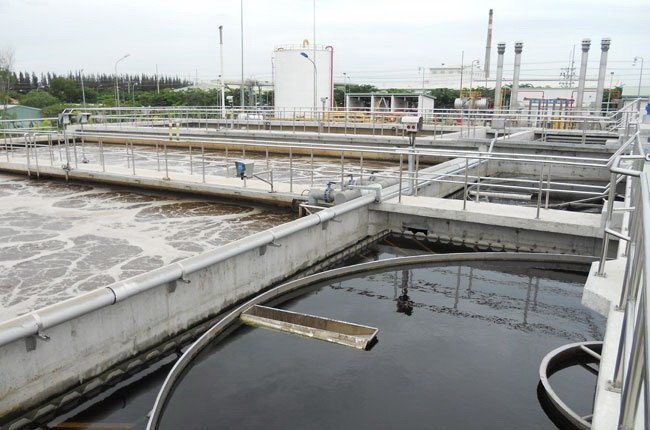
Wastewater from industrial processes contains a mix of organic compounds, suspended solids, and chemical residues. A one-size-fits-all approach is not viable. RTW applies a staged process model built around physical and biological as well as chemical treatment to ensure safe and reliable results in every system we build.
Biological Processes
This stage targets organic substances in wastewater. Pollutants like nitrogen, phosphorus, biodegradable oil, and dissolved solids are broken down through microbial action.
These organisms convert contaminants into non-harmful gases and stable sediments. This step plays a critical role in reducing environmental load and achieving the wastewater treatment objective defined by regulators.
Physical Processes
The removal of non-dissolved matter happens through mechanical steps. Screening and flotation, along with sedimentation, isolate large particles and oils before they enter the next stage.
These methods are part of the primary treatment of wastewater sewage, and they ensure that biological and chemical processes operate without unnecessary interference.
Chemical Processes
More toxic or resistant pollutants demand chemical intervention. Coagulants and oxidizers, as well as pH stabilizers, are added to destabilize dissolved substances. The chemical stage is calculated to neutralize dangerous inputs that cannot be broken down biologically. This ensures safety and compliance at the final output of each plant.
Sustainable Waste Water Treatment Services in Ajman
Wastewater management is more than meeting regulations. It is an ongoing contribution to water security and industrial efficiency. Facilities in Ajman benefit from adopting structured, high-performance systems that protect infrastructure and natural resources alike. Here is how we focus on sustainability with our practices and processes:
Reduces impact on aquifers and natural water bodies
Minimizes the risk of legal violations and penalties
Improves the reusability of treated effluent
Enhances safety within plant operations
Ensures continuity during inspections or audits
Protects downstream equipment from fouling or corrosion
Primary Wastewater Treatment Fundamentals in Ajman
The first phase of wastewater processing is built on simplicity and precision. It filters out solids, grit, and oils early in the cycle, protecting the more sensitive biological and chemical stages that follow. By managing physical contaminants upfront, the system reduces energy use, wear, and risk across the entire facility.
Mechanical Screening Operations
Treatment begins with mechanical barriers designed to trap solid matter. Coarse screens capture larger items, while fine and micro screens remove fibers and smaller waste. These systems are kept clean using automated mechanisms, ensuring that the incoming flow remains consistent and free of obstruction.
Grit Handling Infrastructure
After screening, the focus shifts to dense inorganic particles, grit that would otherwise damage mechanical parts. Grit chambers slow the water just enough to let these materials settle. Horizontal, aerated, and vortex units are employed depending on design requirements and flow rates.
Clarification Through Sedimentation
Clarifiers are engineered to separate remaining solids using gravity. Heavy particles settle at the base and are moved to sludge collection points. Oils and light waste float to the surface and are skimmed. The tank design is circular or rectangular, depending on site layout and capacity needs.
Chemical Support Systems
Where physical methods aren't enough, chemical support is introduced. Coagulants neutralize fine particle charges. Flocculants then help them clump together into flocs that settle quickly. This chemically enhanced process increases efficiency and minimizes the burden on downstream biological units.
Experts in Industrial Sewage Treatment
Ajman’s industrial zones are subject to strict regulatory oversight. RTW provides systems that meet compliance standards while supporting operational continuity. We are recognized among dependable wastewater treatment solution providing companies in Ajman, with projects installed across multiple industry sectors.
Our engineers build wastewater treatment working models based on actual site conditions. Each system is monitored for stability and updated for long-term efficiency. RTW delivers solutions that maintain safe discharge parameters while improving water use ratios.
Our experience across wastewater treatment in the Middle East region has allowed us to develop benchmarks for cost, output quality, and recovery rates. Clients in Ajman rely on these insights to build future-ready wastewater systems without compromise. As one of the active wastewater treatment companies, our work is driven by precision.
Advanced Treatment Technologies We Use
RTW implements technologies based on site conditions, effluent chemistry, and final water quality targets. Our team selects processes that deliver consistent results under real-world operational conditions. Each technology is reviewed against long-term operating cost and performance efficiency. We also check integration capacity to ensure there are no issues.
Biological Treatment
This process reduces COD and BOD levels using microbial activity. It is ideal for systems that discharge high volumes of biodegradable materials.
Electrocoagulation (EC)
An electric current is used to remove dissolved solids and oil. It is effective during early-stage treatment and prepares the effluent for secondary processes.
Electro-Oxidation (EO)
A high-strength oxidation process for pollutants resistant to biological breakdown. It removes color and chemical residues from complex wastewater streams.
Membrane Bioreactors (MBR)
A combination of biological reaction and filtration. It reduces plant footprint and lowers sludge output while producing high-quality treated water.
Reverse Osmosis (RO)
RO is used in the final treatment or polishing stages. It removes salts and dissolved solids as well as micro-pollutants. It enables safe reuse and supports closed-loop water cycles.