Water is essential for industrial production across the Middle East. Yet some factories produce wastewater that cannot be released through normal discharge routes. High salt levels, strict rules, and limited water supplies can create serious pressure on plant operators.
A zero liquid discharge approach treats wastewater until no liquid effluent leaves the facility. Instead, the system recovers usable water and separates the remaining pollutants into concentrated or solid waste.
This process can reduce freshwater demand while helping industries manage difficult wastewater streams. ZLD can serve many sectors, but its value depends on wastewater quality, recovery goals, local rules, and operating costs.
When Does an Industry Need ZLD?
ZLD becomes useful when an industrial facility has limited options for liquid wastewater disposal. The decision usually depends on water availability, wastewater quality, local discharge rules, and the value of recovered water. These factors help managers decide if a zero effluent discharge approach fits their site and long-term operating plans.
Strict Discharge Requirements
Some facilities face strict limits on wastewater discharge. Their wastewater may contain salts, metals, chemicals, or other substances that require advanced treatment before disposal. A zero discharge plant can remove the liquid discharge route by recovering water and concentrating the remaining waste.
High Water Scarcity
Water shortages can make every cubic meter valuable. Industries in dry regions may benefit from recovering water that would otherwise leave the facility as wastewater. A ZLD setup can return treated water to suitable processes and reduce the amount of fresh water purchased for daily operations.
High-Salinity Wastewater
Wastewater with high salt levels can create serious disposal problems. Traditional treatment may remove pollutants without making the water suitable for discharge. ZLD wastewater treatment can take the process further by concentrating dissolved salts and separating them from recoverable water.
Valuable Water Recovery
Water recovery can become a major reason for adopting ZLD. A facility may reuse recovered water for cooling, washing, or other suitable processes. A zero liquid discharge water treatment system can support this cycle by separating usable water from concentrated contaminants.
Sensitive Industrial Locations
Some industrial sites operate near water resources that require strong protection. Releasing treated wastewater may create environmental concerns even after conventional treatment. A zero discharge system for wastewater treatment can remove liquid discharge while giving the facility greater control over its remaining waste.
How Does the ZLD Process Work?
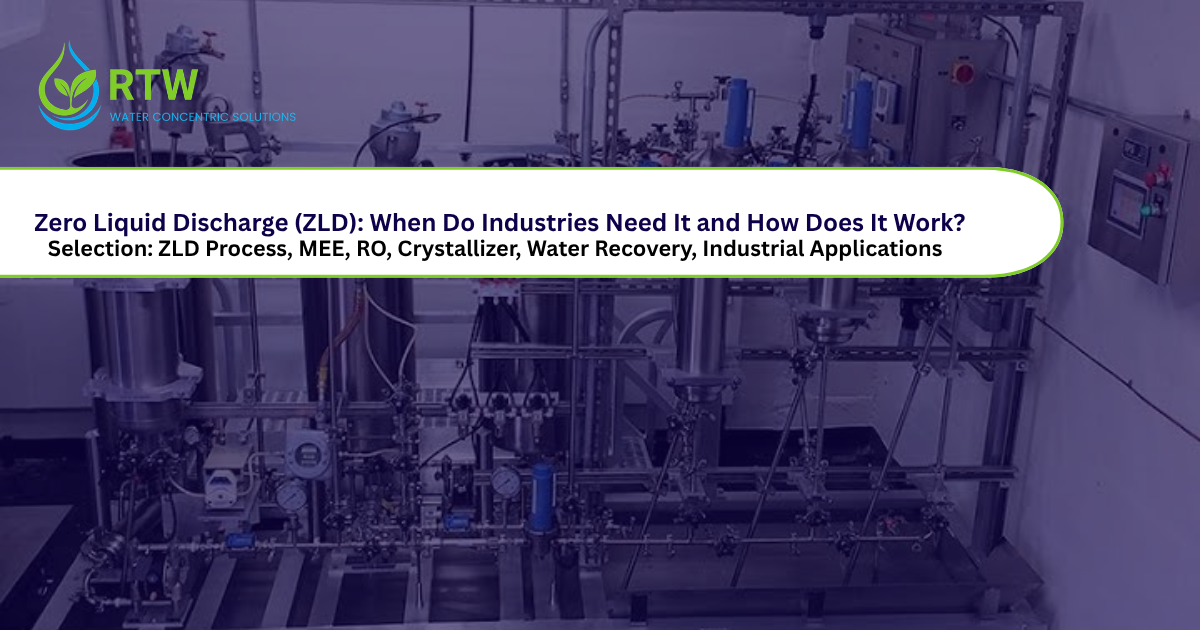
A ZLD system uses several treatment stages that work together. Each stage handles a different part of the wastewater. The process usually starts by removing contaminants and recovering cleaner water. The remaining concentrated stream then receives further treatment until the dissolved materials become solid waste. This creates the complete ZLD process.
Reverse Osmosis Removes Dissolved Solids
Reverse osmosis uses pressure to push wastewater through special membranes. These membranes separate many dissolved salts and other contaminants from the water. The recovered water can move back into suitable industrial uses. The concentrated stream continues through later stages of the ZLD technology setup.
MEE Concentrates Remaining Wastewater
A Multi-Effect Evaporator, or MEE, uses heat to evaporate water from the concentrated stream. The vapor can be condensed and recovered as usable water. The remaining liquid becomes more concentrated as water leaves the stream. This stage prepares the waste for further separation.
Crystallizer Forms Solid Waste
The crystallizer handles wastewater that contains very high levels of dissolved materials. It removes additional water through controlled evaporation. Salts and other dissolved substances then form solid crystals. This step helps complete zero liquid discharge wastewater treatment by preventing the remaining contaminants from leaving as liquid.
Water Recovery and Reuse
Recovered water is one of the main benefits of a ZLD system. Depending on its quality, the water can return to approved industrial processes. This reduces freshwater demand and gives wastewater another useful cycle. Properly managed zero liquid discharge systems can therefore support internal water reuse.
Final Solid Waste Management
ZLD does not make contaminants disappear. It changes their form. Salts and other concentrated materials become solid residues that require proper handling. Operators must collect, store, and manage these solids according to applicable requirements. This final step completes the zero liquid discharge system.
ZLD Applications Across Industries
Different industries produce different wastewater streams. Some contain large amounts of salts, while others contain metals, chemicals, or other difficult contaminants. ZLD can suit facilities that face strict discharge limits or place high value on water recovery. Common applications include the following industrial sectors.
- Power plants: ZLD can manage concentrated wastewater from cooling and other plant processes.
- Textile operations: Treatment can handle wastewater containing dyes, salts, and other production residues.
- Chemical manufacturing: ZLD can manage complex wastewater streams while recovering suitable process water.
- Metal finishing: Metal finishing zero liquid discharge plants can treat wastewater containing metals and other process contaminants.
- Pharmaceutical production: ZLD can support facilities with strict wastewater treatment requirements and high water quality demands.
- Mining operations: ZLD can recover water from wastewater streams containing high concentrations of dissolved minerals.
- Food and beverage facilities: Water recovery can reduce freshwater demand where production creates large wastewater volumes.
The right ZLD setup depends on the wastewater entering the facility. Operators should test the wastewater before selecting treatment equipment. Flow rates, salt levels, suspended solids, organic matter, and other contaminants can affect the treatment sequence.
A proper assessment also helps determine expected water recovery. Some facilities may recover a large share of their wastewater, while others require different treatment stages before reuse becomes practical.
Make ZLD Work for Your Facility
ZLD can help industries manage difficult wastewater, recover valuable water, and eliminate liquid discharge. Its success depends on proper testing, process selection, and system operation.
RT Water provides ZLD technology and treatment solutions suited to industrial wastewater challenges. Contact RT Water to develop a practical ZLD approach for your facility and water recovery goals.\
FAQs About Zero Liquid Discharge
What does ZLD mean for an industrial facility?
ZLD treats industrial wastewater until no liquid discharge remains. The process recovers usable water while concentrating remaining contaminants into manageable solid waste.
Is ZLD suitable for every industry?
ZLD does not suit every facility. Its value depends on wastewater characteristics, discharge requirements, water costs, recovery targets, and the financial feasibility of treatment.
What role does RO play in ZLD?
RO removes many dissolved contaminants from wastewater and recovers cleaner water. Its concentrated reject then moves through evaporation and crystallization stages.
Why does ZLD use an MEE and crystallizer?
The MEE removes water through evaporation and creates a concentrated stream. The crystallizer removes additional water and converts dissolved materials into solid crystals.
How does ZLD help industries recover water?
ZLD separates usable water from salts and other contaminants. The recovered water can return to approved industrial processes and reduce freshwater consumption.