Industrial Waste Water Treatment in Dubai
- Industrial Waste Water Treatment in Dubai
Industrial Waste Water Treatment in Dubai
RTW provides professional, compliant, and high-standard wastewater treatment services in Dubai. Our expertise is focused on delivering reliable solutions for complex industrial effluents. With every project, we aim to uphold environmental integrity, ensure operational safety, and meet the growing demand for efficient industrial wastewater treatment plants in Dubai.
We operate with full awareness of the region’s regulatory frameworks and ecological constraints, delivering outcomes that support both sustainability and industry continuity.
Industrial Waste Water Treatment Processes
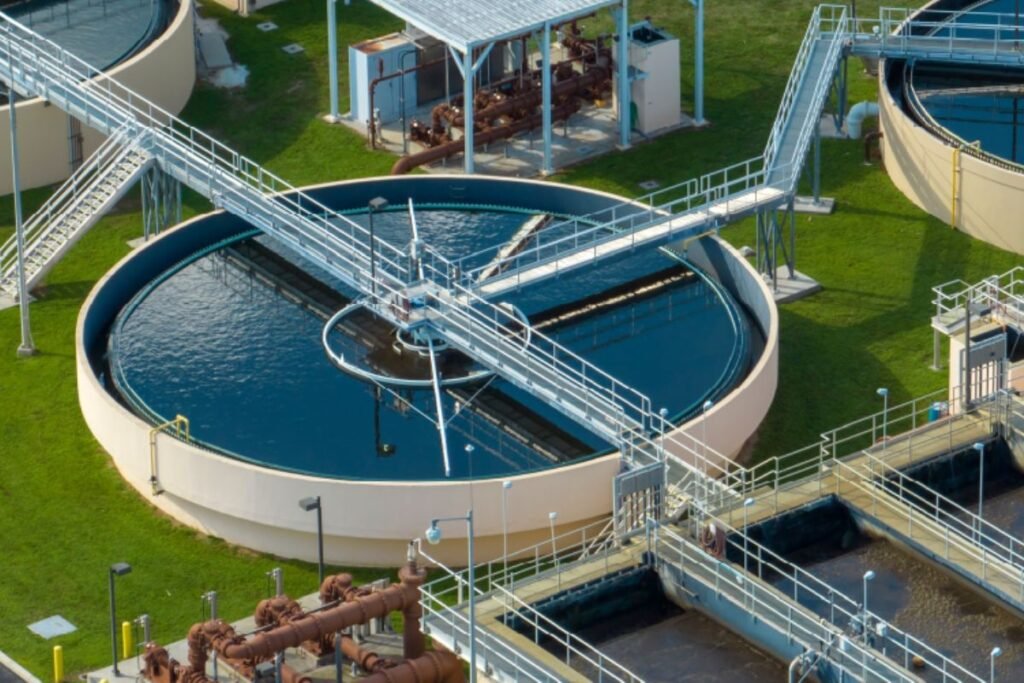
Industrial effluents can contain a wide variety of contaminants, from oils and chemicals to heavy metals and suspended solids. The treatment process must therefore be precise, multi-staged, and adapted to the nature of the pollutants involved. Below are the key treatment methods we implement.
Biological Processes
This phase involves the use of microorganisms to degrade organic matter such as oils, nitrogen, phosphorus, and biodegradable compounds. The wastewater treatment objective here is to convert these substances into harmless gases and solid sediments. These by-products can then be safely removed or further processed, reducing the overall pollutant load.
Physical Processes
Pollutants are first separated through non-chemical means. Common techniques include sieving to remove large solids, flotation to lift suspended particles, and filtration to separate finer materials. This process helps in reducing the burden on subsequent treatment stages and supports higher system efficiency.
Chemical Processes
When dealing with chemically complex or toxic waste streams, we introduce selected reagents to neutralize or transform contaminants. Processes such as coagulation, flocculation, oxidation, and pH neutralization are applied. This phase is essential when biological or physical methods alone are insufficient to meet discharge or reuse standards.
Primary Treatment of Waste Water Sewage: Foundation of Effective Treatment
Primary treatment plays a critical role in reducing pollutant load before more advanced systems are applied. RTW places a key focus on this stage and it is engineered with precision to protect downstream equipment and enhance overall process reliability. The steps involved are foundational but essential to achieving the broader waste water treatment objective.
Screening: The First Barrier
The treatment process begins with screening, which filters out larger objects and floating debris that could otherwise damage pumps and block pipelines. Coarse screens remove large solids such as plastics and textiles. Fine screens target smaller fibrous materials like paper, while micro screens filter finer particles. Mechanically cleaned screens ensure uninterrupted operation and are standard in our facilities.
Grit Removal: Targeting Inorganics
Once screened, the wastewater passes through grit chambers. These units are designed to slow the flow, enabling heavy inorganic particles like sand, gravel, and glass to settle. RTW uses horizontal-flow, aerated, or vortex grit chambers depending on site conditions and influent characteristics. Removing grit at this stage is essential to reducing mechanical wear and maintenance costs.
Sedimentation: Separating Solids and Scum
In large settling tanks, also known as primary clarifiers, water is held to allow gravity to separate solids. Heavier particles form sludge at the bottom, while lighter materials such as oils float to the top and are skimmed off. This step typically removes up to 70% of suspended solids and up to 40% of BOD.
Chemical Enhancement: Improving Performance
For effluents requiring higher efficiency, coagulants and flocculants are added. These agents help particles clump together and settle more effectively. This chemically enhanced treatment improves outcomes and supports tighter discharge regulations.
Wastewater Treatment Services in Dubai: Focus on Sustainability
Our responsibility extends beyond treatment. We incorporate environmental stewardship into every phase of our service delivery. The goal is to provide safe, repeatable, and regulation-compliant outcomes while preserving local resources and reducing secondary waste production.
Energy-efficient technologies designed to minimize power consumption during treatment cycles
Water recovery systems that allow treated water to be reused safely in non-potable applications
Sludge reduction strategies that minimize disposal volumes and improve overall process efficiency
Emission control systems to prevent the release of harmful gases during chemical treatments
Ongoing performance monitoring for long-term operational reliability
Modular systems that allow for easy scalability and site-specific customization
Each component is structured to align with Dubai’s sustainability goals and support environmentally responsible industrial growth.
Advanced Treatment Technologies We Use
Some industrial effluents are too complex for standard treatments. In these cases, we apply advanced systems that allow for deeper pollutant removal and water reuse capabilities. Our technologies are selected based on effectiveness, safety, and compliance with local and international environmental codes.
Biological Processes
We employ controlled natural processes that break down organic contaminants. This method is particularly useful in reducing Chemical Oxygen Demand (COD) and Biological Oxygen Demand (BOD), both of which are key indicators of water quality. The result is a more stable and safer water output.
Electrocoagulation (EC)
This technology uses electrical currents to destabilize and separate dissolved metals and solids. EC is highly effective in early-stage treatment, especially for wastewater containing suspended oils, heavy metals, and emulsified fats. It also reduces reliance on chemical additives.
Electro-Oxidation (EO)
Used for degrading highly stable and persistent pollutants, this process introduces electrical currents that generate hydroxyl radicals and other oxidants. EO significantly enhances the breakdown of chemical residues and boosts effluent quality before final discharge or reuse.
Membrane Bioreactors (MBR)
Combining membrane filtration with biological treatment, MBR units achieve higher removal efficiencies than traditional systems. The result is a compact setup that delivers excellent effluent clarity and reduces the need for additional treatment steps.
Reverse Osmosis (RO)
RO is utilized at the final stage to remove dissolved salts, bacteria, and minute particles. The pressure-driven process delivers high-purity water suitable for industrial reuse. It also provides a robust polishing step to meet the most stringent discharge or recycling requirements.
Why RTW Water is Your Trusted Companion in Dubai for Wastewater Treatment
RTW operates at the intersection of engineering excellence, environmental compliance, and client satisfaction. We are one of the few wastewater treatment solution providing companies in Dubai with a full-spectrum approach that covers assessment, design, installation, and aftercare.
Our teams are trained in the most advanced wastewater treatment working models, and we maintain rigorous internal audits to ensure each project meets regulatory and safety benchmarks. From initial water profiling to final discharge validation, our work is driven by data, safety, and measurable performance.
We understand that our clients cannot afford downtime or legal missteps. That is why every wastewater treatment service we provide in Dubai comes with defined KPIs, transparent communication, and responsive technical support. Our plants are built for longevity, performance, and environmental peace of mind.
As one of the reputable wastewater treatment companies in Dubai, RTW ensures that every project aligns with both the immediate needs of the facility and the long-term sustainability objectives of the region.
Looking for a dependable partner for industrial wastewater compliance and sustainability in Dubai? Contact RTW today to schedule an assessment or request a proposal.