Industrial Waste Water Treatment in Kuwait City
- Industrial Waste Water Treatment in Kuwait City
Industrial Waste Water Treatment in Kuwait City
Wastewater treatment is an operational necessity for manufacturing, petrochemical, and processing plants in Kuwait City, where rapid industrialization continues. Effective management of industrial wastewater is fundamental to environmental integrity and operational compliance.
RTW delivers structured, scalable solutions that support regulatory frameworks, industrial continuity, and ecological responsibility.
RTW specializes in designing and implementing treatment systems aligned with industrial output levels and sector-specific requirements. This is why we are recognized among the leading wastewater treatment companies in Kuwait City. Each facility is equipped to manage varying inflow compositions while maintaining system efficiency, compliance, and safety.
Industrial Waste Water Treatment Processes
Industrial wastewater is highly variable. It includes suspended solids, oils, chemicals, and organic compounds. A combination of technical processes is required to meet safety discharge limits and operational goals. Below are the standard process categories applied based on pollutant type and treatment depth.
Biological Processes
Biological treatment addresses dissolved and suspended organic pollutants, including hydrocarbons, nitrogen-based substances, phosphates, and biodegradable chemicals. Microorganisms metabolize these substances, converting them into gases and biomass. This process supports the wastewater treatment objective by reducing the organic load efficiently before downstream treatment stages.
Physical Processes
Physical separation is used to eliminate visible impurities and non-dissolved materials. Techniques such as sedimentation, flotation, screening, and filtration are applied to isolate solids and grease. These are core steps in the primary treatment of wastewater sewage, preparing the influent for advanced biological or chemical treatment.
Chemical Processes
Certain contaminants require chemical conversion or neutralization. In this phase, reactions are triggered using flocculants, coagulants, oxidants, or pH stabilizers. These are necessary for treating wastewater containing emulsified oils, metals, dyes, or acids. This process is essential, where the method used in the treatment of wastewater must go beyond passive separation.
Focusing on Sustainability for Wastewater Treatment Services in Kuwait City
RTW prioritizes operational sustainability alongside regulatory compliance. Our wastewater systems are designed to reduce energy demand, minimize chemical use, and optimize water reuse where possible. These features are embedded in all project executions and treatment plant operations under our management. With a key focus on sustainability, we ensure that:
All treatment stages are monitored with real-time analytics to ensure efficiency.
Systems are built with modular capacity for future industrial growth.
Chemical dosing is controlled to minimize surplus discharge.
Treated water is recycled where appropriate to reduce freshwater use.
Sludge management is integrated to reduce environmental impact.
Staff training and ongoing support are provided to uphold long-term reliability.
These steps are part of RTW’s commitment to dependable wastewater treatment services in Kuwait City that meet international and regional expectations.
Essential First-Stage Processing in Wastewater Treatment
Before water can be subjected to biological or chemical purification, it must be physically stabilized. Primary treatment performs this role by removing solid and floating matter. This process reduces pollutant load, protects downstream systems, and forms the baseline for efficient, regulation-compliant treatment across wastewater facilities.
Screening: Eliminating Visible Debris
This step focuses on removing physical waste at the entry. Coarse screens block large items like rags and plastics. Fine and micro screens trap paper, hair, and smaller fibers. These units are usually equipped with automatic cleaning tools, maintaining performance during continuous operation.
Grit Removal: Managing Heavy Inorganics
Once screened, wastewater flows into grit chambers. These basins slow down the flow, allowing dense inorganic particles, such as sand and crushed material, to settle. Horizontal-flow systems are most common, while aerated and vortex designs are used where higher removal efficiency is required.
Clarification: Settling Solids and Skimming Scum
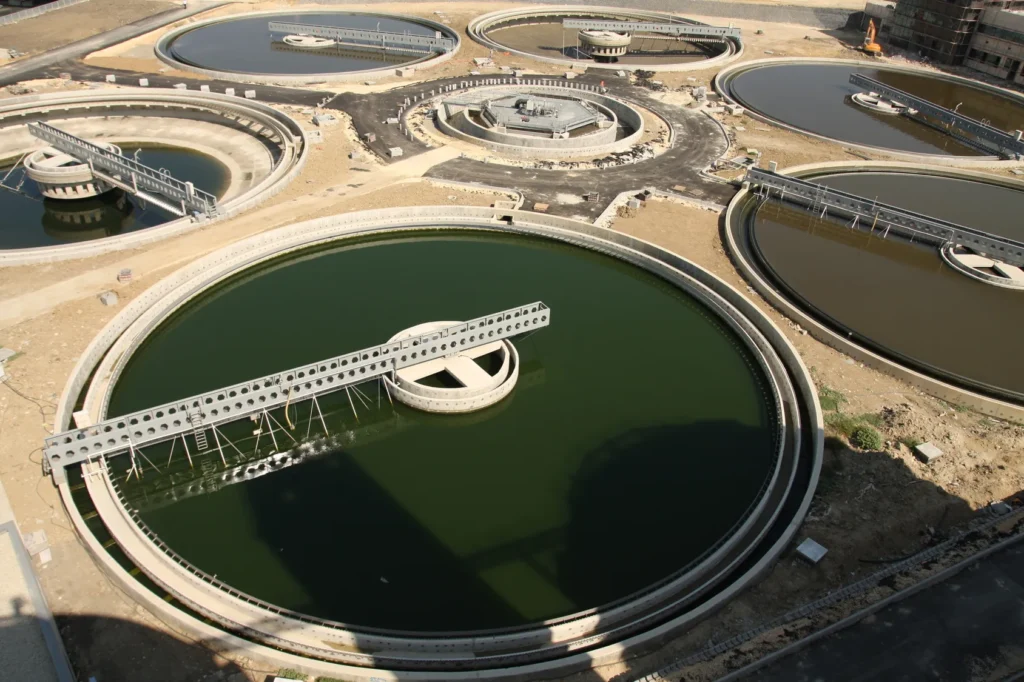
Clarifiers give the water time to separate. Solids sink to the bottom and are removed as sludge. Floating substances like grease and oil are skimmed from the top. Rectangular and circular designs are used, depending on site layout and hydraulic load.
Chemical Enhancement: When Required
If suspended solids persist, treatment is chemically assisted. Coagulants break down repelling particle charges, while flocculants help create heavier aggregates. These aggregates settle more efficiently. Known as CEPT, this enhancement is often used in systems that require higher performance before secondary treatment begins.
RTW Water: Your Trusted Companion in Kuwait City for Wastewater Treatment
RTW brings measured, technical capability to each project. With a consistent focus on results, safety, and system longevity, we deliver wastewater solutions that support both industrial goals and environmental accountability. Our clients rely on us for continuity, regulatory assurance, and system efficiency.
As a trusted partner when it comes to wastewater treatment companies, RTW works across sectors to deliver both standalone and integrated plant solutions. Each industrial wastewater treatment plant in Kuwait City is constructed with full engineering transparency and built-in operational safeguards.
We are actively contributing to scalable wastewater treatment working models that serve not just the Kuwait City region, but broader wastewater treatment in the Middle East initiatives. With each system, we target measurable reduction in pollutants and meaningful water recovery, improving industrial sustainability in practice, not theory.
While we operate across various regions, RTW maintains its commitment to efficiency and accountability. Our engineering teams remain closely involved from design through implementation. All systems are supported with real-time monitoring, diagnostic tools, and service continuity plans.
Advanced Treatment Technologies We Use
Some wastewater profiles, especially from the petrochemical or pharmaceutical sectors, exceed conventional treatment capabilities. RTW applies advanced solutions where stricter effluent standards or reuse requirements are involved. Each system is selected based on influent analysis and discharge targets.
Biological Treatment
A process utilizing aerobic or anaerobic bacteria to degrade organic matter. This step is effective for reducing BOD and COD levels. It is commonly used in the food, beverage, and textile industries where organic waste content is high.
Electrocoagulation (EC)
An early-stage treatment method that separates suspended solids and metals using electric charge. It enhances clarity and reduces the burden on biological processes. EC is especially beneficial in industries involving high concentrations of oil or grease.
Electro-Oxidation (EO)
This advanced technique removes refractory pollutants and persistent organics using electric current and oxidation agents. EO is deployed where wastewater contains dyes, pharmaceuticals, or chemicals that resist biological breakdown.
Membrane Bioreactors (MBR)
MBRs combine membrane filtration with biological treatment in a compact setup. The process increases output quality and minimizes the number of treatment stages. MBRs are effective in limited-space environments with strict discharge limits.
Reverse Osmosis (RO)
RO applies pressure to push water through semi-permeable membranes, removing salts, minerals, and micro-contaminants. This step is typically used in polishing stages, allowing water to be reused or safely discharged into natural systems.