Industrial Waste Water Treatment in Muscat
- Industrial Waste Water Treatment in Muscat
Industrial Waste Water Treatment in Muscat
RTW provides specialized wastewater treatment services in Muscat designed to meet industrial discharge regulations and environmental compliance standards. Our systems focus on efficient contaminant removal, process consistency, and operational reliability.
As one of the trusted wastewater treatment companies in Muscat, we address complex effluents across diverse industries through tested methods and scalable technologies.
Each treatment plan is customized to ensure alignment with environmental laws and specific process demands. Our focus remains on performance, safety, and long-term water management.
Industrial Waste Water Treatment Processes
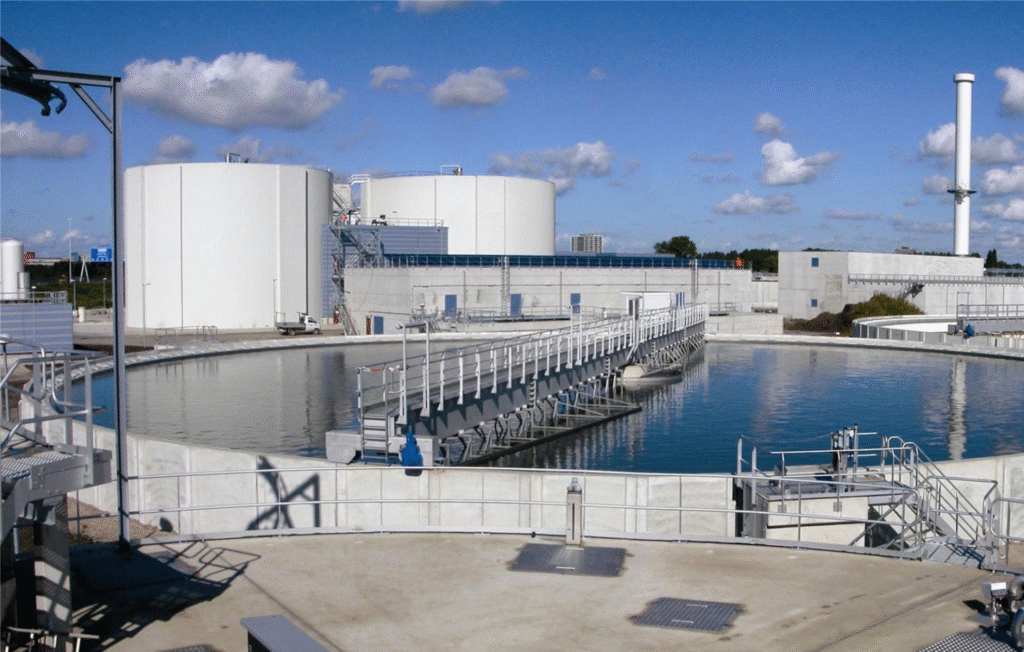
Industrial effluents vary in composition and volume. This is why they require a structured process for effective treatment. The team at RTW implements treatment plans that include biological, physical, and chemical methods. These methods operate independently or in combination, depending on waste characteristics.
Biological Processes
Biological treatment is applied to wastewater containing organic matter. The process targets substances such as:
- Nitrogen
- Phosphorus
- Oils
- Biodegradable compounds
Microorganisms break these down into gases and sedimentary solids that can be separated. This process is often integrated early in system design for high-organic-load effluents.
Physical Processes
Physical methods remove pollutants using direct separation. Various techniques are used to extract suspended solids and separate immiscible liquids. These techniques include:
- Sieving
- Flotation
- Sedimentation
- Filtration
Physical processes often form the preliminary phase in multi-stage systems.
Chemical Processes
Chemical processes are employed for contaminants that do not respond to physical or biological treatment. Flocculation, coagulation, oxidation, and pH adjustment are typical methods. These are especially effective in removing metals, toxic compounds, and residual organics from industrial effluents.
Purifying Tomorrow's Waters, Today
We implement performance-focused strategies that deliver clear and repeatable outcomes. Our process design reflects the strict standards required in industrial operations.
Continuous compliance with local discharge standards
Modular systems tailored for site-specific loads
Efficient removal of dissolved and suspended pollutants
Reduced operational downtime through automated controls
Full-cycle treatment options from collection to discharge
Ongoing system monitoring and technical support
Initial Solid-Liquid Separation in Wastewater Plants
Primary treatment is the essential starting point in any treatment system. It removes debris, suspended solids, and grit to prepare wastewater for advanced processes. By stabilizing influent quality at the outset, this phase ensures downstream components operate within safe parameters, increasing treatment efficiency and minimizing operational disruptions.
Step 1: Screening for Physical Waste
Wastewater typically contains solid waste, out of which is visible, while some is microscopic. Screening tackles this with different mesh sizes. Coarse screens capture large objects. Fine and micro screens handle smaller particles. These mechanisms work nonstop and are often equipped with self-cleaning systems to prevent buildup and maintain optimal flow rates.
Step 2: Grit Chamber Operations
Non-biodegradable but abrasive particles such as gravel, glass, and sand are separated next. These elements can cause pump and pipe degradation if not removed early. Grit chambers reduce water velocity, allowing heavy particles to settle. The chosen design, horizontal, aerated, or vortex, depends on site-specific flow dynamics.
Step 3: Gravity-Driven Clarification
Clarifiers provide still water conditions where solids sink to the bottom and form sludge, while oils and greases rise to the top. Rotating arms or scrapers remove the settled sludge. Surface skimmers handle floating material. This process is continuous and vital to reducing solid loads on secondary systems.
Step 4: Optional Chemical Enhancement
When additional efficiency is needed, chemical additives come into play. Coagulants destabilize fine particulates, and flocculants bind them into flocs. These aggregates settle more quickly, increasing removal rates for suspended solids and BOD, ultimately improving the effectiveness of the entire treatment chain.
Advanced Treatment Technologies We Use
Our engineering team deploys high-efficiency systems using advanced technologies. Each unit is selected based on effluent quality, regulatory limits, and operational expectations. Here are some core technologies used in our treatment systems.
Biological Treatment
This approach uses bacteria to decompose organic pollutants. It’s suitable for treating wastewater with high chemical oxygen demand (COD) and biological oxygen demand (BOD). The process is cost-effective and environmentally compliant. It performs well in sectors where organic loads are consistently high. Common applications include:
- Agro-processing
- Beverage production
- Food manufacturing
The system relies on activated sludge, aerobic digestion, or anaerobic modules, depending on process type. RTW integrates these systems with digital monitoring tools to ensure process stability and predict load fluctuations.
Electrocoagulation (EC)
Electric current is applied to separate contaminants such as metals and suspended solids. The technology is most useful in initial treatment stages, particularly for oily or metallic effluents. The process destabilizes particles in wastewater. This allows for easier removal via sedimentation or filtration.
It reduces the need for chemical coagulants, which lowers sludge volumes and disposal costs. RTW systems are fitted with automated power management and corrosion-resistant electrodes to improve operational reliability and reduce energy use over time.
Electro-Oxidation (EO)
This method uses electric charge to break down persistent organic pollutants. It provides chemical-free degradation and enhances the quality of treated water before discharge or reuse. Electro-oxidation works well for:
- Wastewater containing dyes
- Phenols
- Pesticides
- Pharmaceutical residues
It produces fewer byproducts and requires less space than conventional oxidation methods. The process is highly scalable and is often paired with other advanced oxidation processes (AOPs) in RTW’s installations to increase overall treatment effectiveness and reduce post-treatment chemical demand.
Membrane Bioreactors (MBR)
MBRs combine filtration and biological treatment in one unit. These systems produce high-quality effluent with reduced operational footprint. They are suited for facilities that require advanced purification in a limited space.
The membranes used are microfiltration or ultrafiltration grade, ensuring near-complete removal of solids and pathogens. RTW employs automated membrane cleaning cycles, online monitoring of transmembrane pressure, and sludge recirculation strategies to extend membrane life. These systems also support nutrient removal when integrated with denitrification and phosphorus control modules.
Reverse Osmosis (RO)
RO systems remove fine particles and dissolved salts. This step is typically used for final-stage treatment where water must meet stringent reuse or recycling standards. The process applies high pressure to force water through semi-permeable membranes.
RTW’s RO modules are built for industrial-scale flows and are optimized for energy recovery. They include multi-stage configurations, pre-treatment units, and anti-fouling systems. RO is especially effective in sectors requiring ultrapure water or where discharge restrictions on total dissolved solids (TDS) are tight.
Excellence in Water Treatment Solutions
RTW supports industry through tailored engineering and field-tested wastewater treatment working models. We manage complete system integration, from assessment to commissioning.
As one of the established wastewater treatment companies serving the region, we support a wide range of operations, including:
Food processing
Chemicals
Textiles
Manufacturing
Our expertise contributes to the growing demand for wastewater treatment in Middle East economies, where industrial expansion requires regulated discharge practices.
Rigid Processes to Ensure Compliance
We maintain structured project workflows, documented testing, and client-specific reporting. By ensuring alignment with legal and environmental frameworks, RTW enables sustainable operations across sectors. Our systems support:
Primary treatment of wastewater sewage
Process design aligned with the wastewater treatment objective
Compliance-driven engineering for regulated industries
Structured support from concept to operation
Custom systems for each industrial wastewater treatment plant in Muscat
Partnerships with certified suppliers and labs
RTW continues to stand among the top wastewater treatment companies in Muscat that deliver measurable environmental and operational outcomes.