
Chemical coagulation system
- Electrocoagulation
Electrocoagulation Systems by RTW
Industrial wastewater streams often contain finely dispersed solids, emulsified oils, heavy metals, and colloidal contaminants that cannot be removed through mechanical separation alone. RTW provides engineered coagulation and electrocoagulation systems that address these challenges at the source.
This helps in improving treatment efficiency, protecting downstream assets, and supporting discharge or reuse compliance across industrial sectors. RTW systems are developed for reliability, process stability, and integration within complete wastewater treatment schemes, serving industrial facilities across the Middle East.
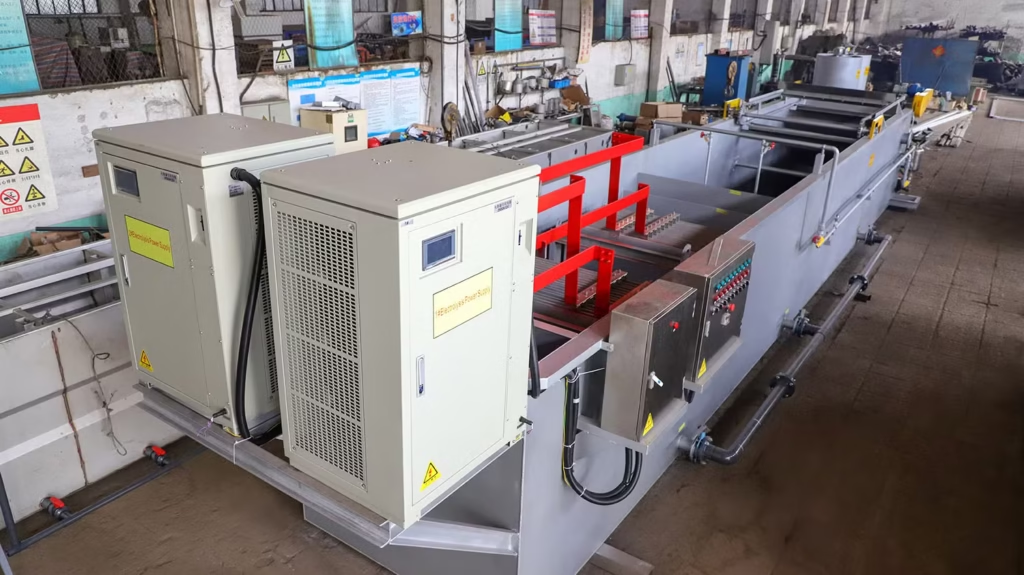
RTW Electrocoagulation Treatment Scope
RTW delivers coagulation-based treatment solutions as dedicated systems or as integrated components within broader treatment plants. These systems are designed to condition wastewater prior to clarification, flotation, membrane filtration, or advanced polishing stages. Here is how RTW structures coagulation and electrocoagulation installations for industrial environments.
Contaminant Conditioning and Load Reduction
RTW systems destabilize suspended and colloidal particles, allowing effective aggregation and removal. This conditioning step significantly reduces turbidity, oil carryover, and metal concentrations, ensuring stable influent quality for subsequent treatment units.
Compatibility With Industrial Effluents
RTW designs systems for wastewater generated by manufacturing, processing, and utilities operations. These include streams containing oils, dyes, surfactants, fine solids, and dissolved metals that require controlled particle destabilization.
Continuous Operation Under Variable Conditions
System layouts account for fluctuating flows and contaminant loads. Control strategies support consistent performance without frequent operator intervention, ensuring predictable results across extended operating cycles.
Chemical Coagulation Systems Engineered by RTW
System architecture prioritizes operational clarity, dosing accuracy, and integration flexibility. The following components define RTW’s chemical coagulation approach.
Dosing and Reaction Control
RTW systems incorporate precise chemical dosing equipment aligned with influent flow and water quality parameters. Controlled reaction conditions support reliable particle destabilization without overdosing or excessive residuals.
Flocculation Zone Design
Flocculation chambers are designed to promote controlled particle contact while preventing shear-related floc breakdown. Hydraulic retention and mixing energy are aligned with wastewater characteristics to maintain separation efficiency.
Sludge Management Compatibility
RTW coagulation systems are designed with downstream sludge handling in mind. Sludge volume, solids concentration, and dewatering compatibility are considered during system selection and layout planning.
Electrocoagulation Systems Delivered by RTW
RTW electrocoagulation systems generate coagulant species directly within the wastewater stream using electrically activated electrodes. This approach reduces dependency on bulk chemical storage and improves treatment consistency for complex industrial effluents.
RTW electrocoagulation systems are supplied as standalone units or as part of complete treatment lines. Their configuration reflects site conditions and operational objectives.
In-Situ Coagulant Generation
Electrodes release reactive metal ions under controlled electrical input. These ions destabilize suspended particles and emulsions directly within the treatment chamber, improving aggregation efficiency under variable influent conditions.
Integrated Flotation Support
Electrochemical reactions generate fine gas bubbles that support flotation-based separation. This improves the removal of oils, greases, and low-density solids that may not readily settle.
Electrical and Process Control
RTW systems incorporate adjustable current and voltage control. Automated monitoring allows operators to maintain stable treatment performance while responding to influent variability without manual recalibration.
System Selection Strategy: Coagulation vs Electrocoagulation
RTW supports clients in selecting the most appropriate coagulation approach based on wastewater characteristics, operational preferences, and site constraints. Both technologies address similar contaminants but offer different operational advantages. Selection decisions are guided by technical assessment rather than a generic application.
Chemical Handling and Storage Considerations
Chemical coagulation requires secure storage and handling infrastructure. Electrocoagulation minimizes external chemical dependency, reducing storage footprint and associated safety requirements.
Footprint and Installation Constraints
Electrocoagulation systems are compact and suitable for space-limited installations. Chemical coagulation systems may require larger reaction and dosing areas but remain effective for high-flow applications.
Operational Control Philosophy
Chemical systems rely on dosing accuracy and monitoring, while electrocoagulation emphasizes electrical control. RTW aligns system selection with the client’s operational capability and maintenance strategy.
Why Choose RTW for Electrocoagulation Systems
RTW combines process knowledge, engineering capability, and regional experience to deliver reliable coagulation-based treatment systems across the Middle East. Clients select RTW for consistent execution and long-term operational confidence.
Regional Industrial Experience
RTW systems operate across diverse industrial sectors and climatic conditions, ensuring designs reflect regional realities rather than generic assumptions.
Integrated Treatment Expertise
Coagulation systems are designed as part of complete treatment solutions, ensuring compatibility with screening, flotation, biological, membrane, and polishing processes.
Long-Term Performance Focus
RTW prioritizes system stability, maintainability, and lifecycle value, supporting dependable operation beyond initial commissioning.
Contact RTW to discuss coagulation and electrocoagulation systems engineered for stable performance, regulatory alignment, and long-term wastewater treatment reliability.