Dissolved Air Flotation (DAF)
- Dissolved Air Flotation (DAF)
Dissolved Air Flotation (DAF) Systems
Dissolved Air Flotation (DAF) systems are advanced clarification solutions used for the effective separation of suspended solids, oils, grease, and low-density particles from wastewater. At RTW, DAF systems are engineered to deliver stable performance under variable industrial loading conditions while supporting compliance, reuse objectives, and downstream process protection.
RTW DAF systems are designed as precision clarification units, suitable for primary and secondary treatment stages across industrial wastewater treatment facilities.
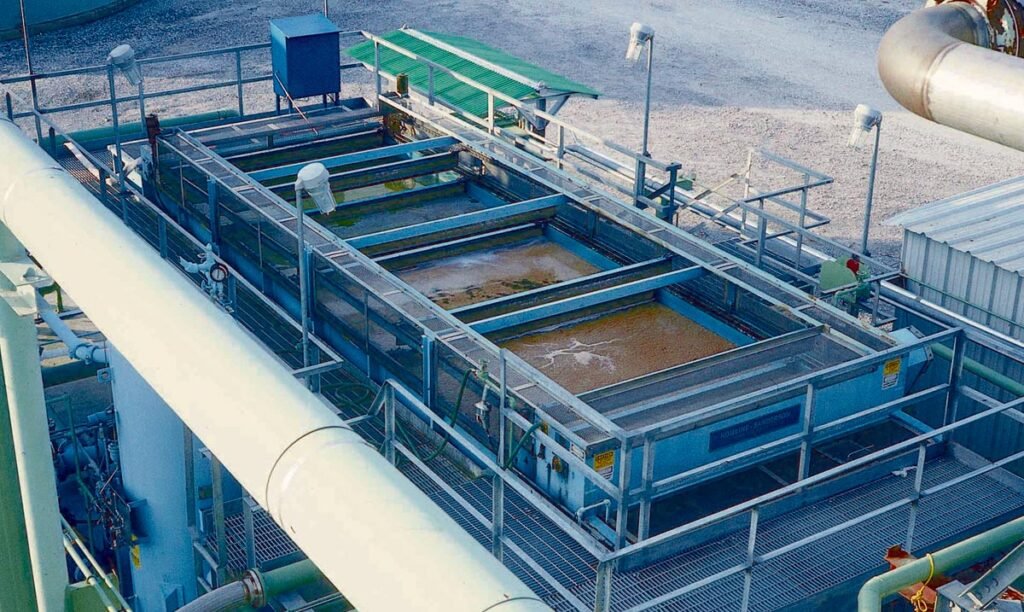
DAF System Overview
DAF systems operate by attaching microscopic air bubbles to suspended contaminants, causing them to rise to the surface for mechanical removal. This separation approach is especially effective where gravity settling alone is insufficient due to low particle density or emulsified contaminants.
Flotation-Based Separation Mechanism
DAF systems rely on controlled air dissolution and release to generate fine bubbles. These bubbles adhere to suspended solids, fats, oils, and grease, creating buoyant aggregates that separate rapidly from the wastewater stream.
Consistent Clarification Performance
The flotation process provides predictable removal efficiency even when influent characteristics fluctuate. This makes DAF systems suitable for industries with variable production cycles and changing wastewater composition.
High-Efficiency Solids Removal
DAF systems are capable of removing fine particles that are difficult to settle through conventional clarification. This enhances effluent quality while reducing loading on downstream treatment processes.
Core Structural and Mechanical Components
The performance of a DAF system depends on precise interaction between hydraulic design, air generation, and mechanical removal systems. RTW designs each DAF unit with a focus on stability, reliability, and long-term operational control.
Air Saturation and Release Assembly
Pressurized recycled water is saturated with air and released under controlled conditions. This produces uniform microbubbles that promote effective attachment to suspended contaminants across the flotation zone.
Flotation Tank Configuration
Tank geometry is engineered to support even flow distribution and stable surface loading. This prevents short-circuiting and ensures uniform contaminant rise throughout the treatment area.
Skimming and Sludge Collection Systems
Floating solids are removed using mechanically driven skimmers designed for continuous operation. Skimmer assemblies ensure consistent sludge removal without disturbing the clarified water zone.
Sludge Handling and Discharge Control
Collected sludge is directed into designated hoppers or troughs for controlled withdrawal. System design supports predictable sludge consistency and stable downstream handling.
Operational Stability and Process Control
DAF systems are selected for applications requiring rapid separation and controlled effluent quality. RTW designs DAF systems to maintain stable operation with minimal intervention across extended operating cycles.
Hydraulic Load Adaptability
DAF systems are configured to handle fluctuating flow rates and solids concentrations. Controlled recycle ratios and flotation zone hydraulics support steady separation efficiency.
Surface Loading Management
Optimized surface loading rates prevent excessive solids accumulation and ensure reliable skimmer operation. This maintains consistent clarification output across variable operating conditions.
Chemical Conditioning Compatibility
DAF systems perform effectively when paired with coagulation or electrocoagulation stages. Proper floc formation enhances bubble attachment and improves overall flotation efficiency.
Continuous Treatment Capability
DAF systems operate as continuous clarification units, supporting uninterrupted wastewater treatment for industrial facilities with constant or high-volume discharge requirements.
Integration Within Treatment Frameworks
DAF systems play a critical role within multi-stage wastewater treatment systems. RTW designs each DAF installation to integrate seamlessly with upstream conditioning processes and downstream treatment units.
Primary Treatment Applications
In primary treatment, DAF systems remove oils, grease, and suspended solids following screening and chemical conditioning. This reduces organic and solids loading on biological treatment stages.
Secondary and Tertiary Support
DAF systems are used to polish effluent after biological treatment or to enhance clarification before filtration or membrane systems. This improves overall system stability and performance.
Retrofit and Upgrade Solutions
DAF systems are frequently applied in plant upgrades where existing clarification capacity is insufficient. Compact layouts allow installation without major civil modifications.
Downstream Equipment Protection
By reducing suspended solids and fats, DAF systems protect membranes, filters, and advanced treatment units from fouling and hydraulic stress.
Performance Contribution to Treatment Reliability
DAF systems contribute directly to treatment consistency, compliance support, and operational predictability. RTW systems are engineered to deliver measurable performance benefits across industrial sectors.
Improved Effluent Clarity
Effective flotation enhances effluent quality by removing fine and emulsified contaminants that are difficult to separate using gravity-based methods.
Reduced Biological System Stress
Lower solids and oil loading improve biological treatment stability and reduce upset risks in downstream reactors.
Controlled Sludge Characteristics
DAF-generated sludge is typically thicker and more manageable, supporting efficient handling and disposal processes.
Operational Predictability
Stable flotation performance allows operators to maintain consistent treatment output despite changes in influent quality.
Why Industries Choose RTW for DAF Systems
Industries rely on RTW DAF systems for their engineering precision, integration flexibility, and dependable performance under demanding operating conditions.
- Seamless Process Integration: RTW ensures DAF systems operate as part of a complete treatment framework rather than isolated equipment units.
- Reliable Mechanical Performance: Mechanical components are selected and configured for continuous industrial operation and long service life.
- Reduced Operational Intervention: System layouts prioritize stable operation, predictable skimming, and controlled sludge removal.
- Industry-Wide Application Experience: RTW DAF systems are deployed across textiles, food processing, chemicals, oil and gas, and pharmaceutical wastewater treatment facilities.
- Engineering-Driven System Design: RTW DAF systems are designed based on hydraulic analysis and wastewater characteristics rather than standard configurations.
- Compliance-Oriented Output: DAF systems support regulatory discharge requirements and internal reuse standards across industrial applications.
- Application-Specific Configuration: Each system is configured to address industry-specific contaminants such as oils, greases, fibers, or fine suspended solids.
Get end-to-end delivery capability as RTW provides complete project support, including design, supply, installation coordination, and commissioning assistance.